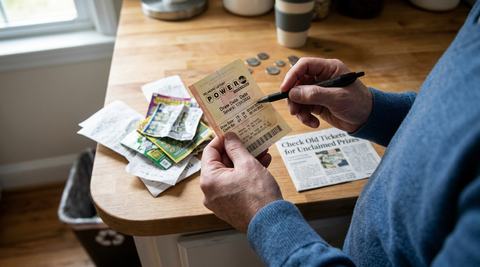
Image credit: Created by AI
Before Throwing Out an Old Lottery Ticket, Check Its Deadline
Forgotten lottery tickets may still be tied to unclaimed prizes or second-chance promotions, but deadlines vary by game and jurisdiction.
An old lottery ticket found in a drawer, closet or coat pocket may still require a closer look before it is discarded. Depending on the game and the jurisdiction, the ticket could be connected to an unclaimed prize, a claim deadline or a second-chance promotion linked to a retired scratch game.
The timing is important because lottery tickets do not all follow the same expiration rule. The Delaware Lottery says drawing-game tickets are generally valid for up to one year after the drawing date. Instant-game tickets in Delaware are generally valid for up to one year after the announced end of the game.
That distinction means the date associated with a ticket may not be the only deadline that matters. A drawing ticket may be judged against the date of the drawing, while an instant ticket may be tied to when the game officially ended. Anyone sorting through older tickets needs to identify the game and the lottery that issued it before deciding that the ticket has no remaining value.
Delaware maintains an official list of unclaimed drawing-game prizes, including Powerball and Mega Millions prizes from 2026 drawings. The Delaware Lottery says those drawing-game prizes generally must be claimed within one year of the drawing date, so a ticket connected to an earlier drawing can have a limited window even if it was overlooked for months.
Players comparing an older ticket with draw information can consult the latest Powerball results and the latest Mega Millions results pages for the relevant game information.
New Jersey Lottery also drew attention to forgotten tickets in June 2026. The lottery said three tickets purchased the previous summer were still unclaimed, while noting that New Jersey tickets expire one year after the drawing date.
The New Jersey Lottery urged players to search places where tickets can easily be forgotten, including drawers, closets and old pockets. The warning was not limited to tickets associated with a major jackpot. Smaller winning tickets can remain unclaimed for months or years, making ordinary storage areas worth checking.
A ticket’s original game can also determine whether a nonwinning slip has another possible use. California says older Scratchers games are removed from sale when they are replaced. Nonwinning tickets from games that have ended must be submitted to the Scratchers second-chance promotion before the applicable deadline.
That creates a separate deadline for some scratch tickets. A nonwinning ticket may no longer be part of a game being sold, yet it may still need to be submitted under the rules of a second-chance promotion. The opportunity ends when the applicable submission period closes, so identifying the game and checking its deadline remains necessary.
Delaware’s guidance also sets out steps for a ticket holder who believes a ticket may be a winner. The Delaware Lottery advises signing the back of the ticket, verifying the numbers independently and storing the ticket safely until it is claimed.
Those steps keep the ticket connected to the person who found it while the numbers and expiration period are checked. They also separate the process of confirming a possible prize from the decision to discard a ticket that has only been assumed to be worthless.
Old lottery tickets can have historical significance as well, even when their redemption status is no longer active. The New Hampshire Lottery says ticket sales began on March 12, 1964, when the state offered one $3 ticket type. The state later expanded into lotto-style and scratch games.
Kansas Lottery records another point in the development of lottery tickets. Statewide ticket sales began there on November 12, 1987, and the state’s first instant game, Up and Away, went on sale at that time.
The two historical records reflect different stages in the expansion of lottery formats. New Hampshire began with one ticket type before adding other games, while Kansas’s statewide launch included an instant game identified in its historical record.
For someone finding an old ticket today, however, the practical questions remain more immediate. The ticket should be matched to the lottery and game that issued it, checked against the applicable claim or second-chance deadline, and verified through official lottery information before it is thrown away. Some tickets may have expired, but the deadline cannot be determined reliably from age alone.