Lottery TV Show History: When Draws Became TV Rituals
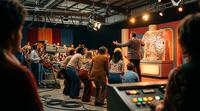
Before results moved easily between websites, apps and video platforms, lottery draws were shared television occasions. From Ontario's traveling WINTARIO broadcasts to Spain's sung Christmas ritual, different markets turned number selection into distinctive public performances.
From Draw to Broadcast
The history of lottery television is not simply a history of results being read aloud. It is a history of presentation: where a draw happened, who took part, how much of the surrounding program was entertainment, and whether viewers were watching a local event or a national ritual.
That makes lottery TV show history useful for understanding how lottery culture developed. The examples from Ontario, California, the United Kingdom and Spain did not follow one template. WINTARIO took the broadcast on the road. California's The Big Spin put contestants at the center of a game-show format. Britain placed regulated draw procedures alongside entertainment programming. Spain's Christmas draw carried a sung-number tradition from earlier media into television and, later, online video.
The common thread was appointment viewing. A lottery draw could be more than a mechanical procedure when television gave it a setting, a host, a live audience or a familiar annual rhythm.
WINTARIO Takes the Draw on the Road
Ontario's WINTARIO offers one of the clearest examples of a lottery using television to create a province-wide event. Its first draw was broadcast live from the Ontario Science Centre in Toronto on May 15, 1975. The first regular live WINTARIO television broadcasts began in October of that year, with Faye Dance and Fred Davis as hosts.
The format became associated with movement through the province. WINTARIO's traveling live broadcasts visited communities across Ontario. The tours covered more than 10,400 kilometers each year, and more than 600 live WINTARIO draws were held around Ontario.
That geography mattered to the character of the program. A studio-only draw would have placed the lottery in one permanent television setting. WINTARIO instead made the setting part of the event. The broadcast could arrive in a community, bring the draw to a local audience and then carry that occasion to viewers elsewhere in the province. The lottery was still a draw, but the television presentation made place and participation visible.
For readers looking at current regional results, Ontario lottery results provide a different kind of access: a result can be checked when convenient, without requiring a live broadcast. Comparing that convenience with WINTARIO's touring model shows how strongly earlier lottery culture depended on a scheduled presentation.
The original WINTARIO game ended with its final draw on January 4, 1990. A later WINTARIO Extra version continued until 1996. The changing game names did not erase the earlier broadcast identity. WINTARIO remains a useful case study in how a lottery can become connected with a region by repeatedly appearing in communities rather than remaining only an abstract set of numbers.
The WINTARIO example also shows how scale can be communicated without relying only on prize figures. More than 10,400 kilometers of annual travel describes the physical commitment behind the broadcasts, while more than 600 live draws describes the number of occasions created around Ontario. Together, those details present the program as a recurring public production rather than a single studio feature.
The Big Spin Makes Contestants the Story
California's The Big Spin used a different television idea. Rather than limiting the program to a ball drawing, it turned contestants into on-camera game-show participants. The program premiered on October 28, 1985, with Chuck Woolery as host.
This distinction is central to The Big Spin history. In WINTARIO, the journey across Ontario was a defining part of the broadcast. In California, the contestant experience became the main dramatic focus. The audience watched people take part in a televised game-show setting, with the iconic wheel serving as a visual centerpiece.
The format lasted for 23 years and ended in January 2009. More than 15,000 contestants appeared during its run, while California Lottery reports that 409 Big Spin contestants won at least $1 million. Those figures describe the scale of the program and its contestant roster; they do not establish a method for improving anyone's chances in a lottery.
The physical wheel also became part of the program's historical memory. The iconic Big Spin wheel is preserved at California Lottery headquarters in Sacramento. That detail helps explain why the show is remembered as a television object as well as a lottery promotion: its defining symbol could be retained and displayed after the broadcast run ended.
The California example also shows how television can personalize a lottery. Number selection is inherently impersonal, but a contestant-driven program gives the audience a person to follow, a reaction to observe and a moment of uncertainty to share. The entertainment comes from the televised situation and the participant's experience, not from any promise that viewers can reproduce the outcome.
For a present-day comparison, California lottery results represent the result-checking function separately from the contestant-centered television format. The historical contrast is between an event built around a participant and a result accessed as information.
The show's longevity is another part of its place in lottery television history. A 23-year run, more than 15,000 contestants and 409 contestants reported to have won at least $1 million describe a substantial television footprint. The preserved wheel provides a tangible reminder of that footprint even though the program ended in January 2009.
Britain Adds the Variety-Show Frame
The first UK National Lottery draw took place on Saturday, November 19, 1994. An official National Lottery timeline records an audience of 22 million for the opening live television draw. From the outset, the British model therefore connected the draw with a large-scale national broadcast occasion.
The UK approach is especially revealing because the draw and the entertainment surrounding it were treated as distinct production components. BBC editorial guidance stated that the lottery operator covered draw administration and equipment, while the BBC paid other program costs and retained editorial control. In practical terms, that separated the official process of conducting the draw from the broadcaster's responsibility for the rest of the television program.
That separation did not make the surrounding show irrelevant. It clarified what viewers were watching. The official draw required controlled administration and equipment. The program around it could include hosts, performances, competitions and other forms of entertainment under the broadcaster's editorial responsibility.
A March 4, 2000 episode of BBC One's Red Alert with the National Lottery illustrates the variety-show approach. The episode combined the lottery draws with a neighborhood team competition and live performances by Bryan Adams and B*Witched. The draw was therefore placed inside a broader television structure rather than presented as an isolated announcement.
BBC guidance also stated that buying a lottery ticket could not be a prerequisite for appearing on a lottery show. Studio audiences could not be charged to attend or participate. These rules are important to the broadcasting history because they describe boundaries around participation: the entertainment program was not supposed to make attendance or appearance dependent on purchasing a ticket.
The British example therefore has two connected histories. One concerns the visibility of the draw itself, including the opening audience of 22 million. The other concerns the production framework around it, in which the lottery operator and broadcaster had different responsibilities. Keeping those functions distinct helped define how the draw could sit within a larger television program.
For a modern point of reference, readers can check United Kingdom lottery results, where the result is separated from the older television experience. The historical contrast is not that one format is better. It is that television once bundled the draw, the host, the audience and the surrounding entertainment into one scheduled event.
Spain Preserves a Sung Ritual
Spain's Christmas Lottery shows another route from lottery procedure to public ritual. The Christmas draw was televised for the first time in 1957. Before that, audiences followed it by radio or in newspapers. Television did not create the central performance from nothing; it carried an established tradition into a new medium.
Children from Madrid's San Ildefonso school have sung lottery numbers since March 9, 1771. Girls first participated in 1984, after the school became coeducational. The singing is therefore much older than the televised Christmas draw, and its importance lies in the continuity of the performance as much as in the broadcast technology.
This is the defining feature of the Spanish model. WINTARIO made travel and provincial presence part of the show. The Big Spin centered contestants and a wheel. British programs placed the draw within a variety format. Spain's Christmas broadcast made the sound and cadence of number singing the ritual's recognizable core.
The result is a form of televised lottery that feels tied to a particular calendar occasion and cultural practice. The broadcast gives viewers a way to witness the tradition, but the tradition supplies the broadcast with its identity. The children's voices are not merely an alternative way to announce results; they are part of what makes the event distinct.
The format has also continued across changing distribution methods. SELAE states that its lottery drawings are currently transmitted every day by Spain's public broadcaster RTVE, with recent draw videos available online. The Christmas example therefore belongs to both broadcast history and the present-day world of recorded and on-demand viewing.
Spain's example is useful because it demonstrates that television does not always need to invent a new format to create a memorable lottery program. A pre-existing performance can retain its identity while the means of distribution changes. Radio, newspapers, television and online video each provide a different way to encounter the draw, while the sung announcement remains the recognizable element.
From Appointment Viewing to On-Demand Video
The transition from scheduled television to online access did not remove the idea of a filmed or streamed draw. It changed the viewer's relationship with it. In September 2006, the UK regulator approved a new Camelot-BBC broadcasting agreement that made Daily Play drawings available through the BBC website. The website became an additional distribution point for a lottery drawing that had been associated more closely with broadcast schedules.
A later example shows the same direction more directly. During a scheduled National Lottery website and app upgrade, Allwyn directed players to YouTube and retailers for draw results and prize breakdowns. That arrangement illustrates the modern shift toward on-demand distribution: viewers can be sent to a video platform or another access point instead of relying on one fixed television window.
On-demand video preserves some elements of the older experience. A recorded draw can still show the equipment, the presenters, the participants or the performance style. It can also let viewers return to the material after the event. What it does not automatically preserve is the shared timing of a whole audience watching together.
That difference is particularly clear across the four examples. WINTARIO's traveling broadcast depended on a community being present as the program arrived. The Big Spin depended on the live-feeling tension of a contestant at the wheel. British lottery variety shows depended on the draw sharing a schedule with competitions and performances. Spain's sung draw retains a recognizable ritual even when a viewer watches a recent video rather than a live television transmission.
The 2006 Daily Play agreement and the later Allwyn upgrade also show that the movement online was not one single change. Websites could become an additional place to access drawings, while later arrangements could direct viewers to YouTube and retailers for results and prize breakdowns. The practical route to information can change even when the draw remains a visible public event.
What Survives After the Broadcast Era
The most durable part of lottery television may not be the television set itself. It may be the production choices that made a draw memorable.
One choice is place. WINTARIO connected the lottery with communities across Ontario by taking the live program on tour. Another is participation. The Big Spin made contestants central and preserved its wheel as a physical reminder of the format. A third is program architecture. The British model showed how a regulated draw could coexist with a larger entertainment program while keeping responsibilities distinct. Spain demonstrates the power of ritual, with sung numbers carrying a tradition that predates television.
These approaches also explain why the phrase "televised lottery draws" covers several different experiences. A televised draw may be a traveling local event, a contestant game show, a national variety program or a ceremonial performance. The numbers are selected in each case, but the public meaning of the broadcast comes from everything arranged around that selection.
On-demand distribution changes the practical experience without making those forms irrelevant. A viewer can watch a draw video after the fact, follow results through a website or use a results page rather than waiting for a program to begin. At the same time, historical formats remain useful for understanding how lottery organizations and broadcasters have connected official procedures with public presentation.
The examples also show that the entertainment layer can take different forms. WINTARIO emphasized movement through Ontario. The Big Spin emphasized the contestant and the wheel. The UK format combined draws with a neighborhood team competition and live performances, while BBC guidance defined responsibilities around the show. Spain emphasized a sung tradition that began in 1771 and reached television in 1957.
A Different Kind of Lottery Night
Lottery television once turned a result into a shared appointment. Ontario's WINTARIO made the road and the local community part of the broadcast. California's The Big Spin made the contestant and the wheel the center of attention. Britain placed lottery draws inside entertainment programming while distinguishing draw administration from editorial programming. Spain carried a long-standing sung-number tradition from radio and newspapers into television and online video.
Together, these examples show that lottery TV show history is really a history of public presentation. The draw itself may be brief, but television can surround it with geography, personality, music, competition and ceremony. Those choices shape what viewers remember.
The on-demand era has made access more flexible, but it has not eliminated the appeal of a visible ritual. Whether someone watches a recent video, checks a result online or studies an older broadcast format, the enduring question is still how a set of numbers becomes a public event.
Lottery draws are entertainment and information, not a reason to spend beyond a personal limit. Keep play within a budget, take breaks and seek support if it stops feeling recreational.
FAQ
What is lottery TV show history?
Lottery TV show history examines how broadcasters and lottery organizations presented draws to the public. It includes the draw itself as well as touring broadcasts, contestant-led game shows, variety programming and long-standing ceremonial traditions.
What was the WINTARIO TV show?
WINTARIO was an Ontario lottery with live television broadcasts that began regularly in October 1975. Its traveling broadcasts visited communities across Ontario, covered more than 10,400 kilometers each year and included more than 600 live draws around the province.
What was important about The Big Spin history?
The Big Spin was a California Lottery game show that premiered on October 28, 1985, with Chuck Woolery as host. It made contestants part of the on-camera program and used an iconic wheel as a central part of the format.
What was distinctive about National Lottery Live history in Britain?
The British model combined official lottery draws with surrounding entertainment programming. BBC guidance distinguished the lottery operator's responsibility for draw administration and equipment from the BBC's responsibility for other program costs and editorial control.
Why is the Spanish Christmas Lottery associated with singing?
Children from Madrid's San Ildefonso school have sung lottery numbers since March 9, 1771. Spain's Christmas Lottery was first televised in 1957, allowing television audiences to experience a ritual that began long before television.
How can people watch lottery draws now?
Modern distribution includes websites, apps and online video. SELAE says Spain's lottery drawings are transmitted by RTVE and that recent draw videos are available online. In the United Kingdom, a website and app upgrade led Allwyn to direct players to YouTube and retailers for draw results and prize breakdowns during the upgrade.
Disclaimer
This article is for general informational and entertainment purposes only. It is not legal, tax, financial, or professional advice. Rules and circumstances vary by location and can change; verify details with the official lottery operator or regulator and consult a qualified professional for advice about your situation.